



Reading/Core Books/Phonics
Literacy is embedded throughout our curriculum, nurturing children as story lovers and confident mark makers from the very start. Children develop a love of books and early writing through stories, rhymes, songs and meaningful mark-making experiences. Through shared reading, storytelling, and playful exploration of marks, children begin to understand that marks, pictures, and words carry meaning. Practitioners model language, storytelling, and early writing, supporting children to express their ideas, experiences, and imagination. By valuing children’s early marks, symbols, and story responses, we foster confidence, creativity, and the skills needed for a life long love of reading and writing.
Our Core Books
Our core books are carefully selected to support children’s learning and development across the curriculum. Throughout the year, children explore a range of age-appropriate, engaging stories, with books chosen to develop a variety of skills, vocabulary and understanding.
Each core book provides opportunities for rich learning experiences, meaningful conversations, creative activities and opportunities to revisit and build on key skills. Stories are brought to life through our provision, group times and planned activities, helping children develop a love of books while making connections between stories and the world around them.
By the time children leave Peartree Way, our children will be confident to….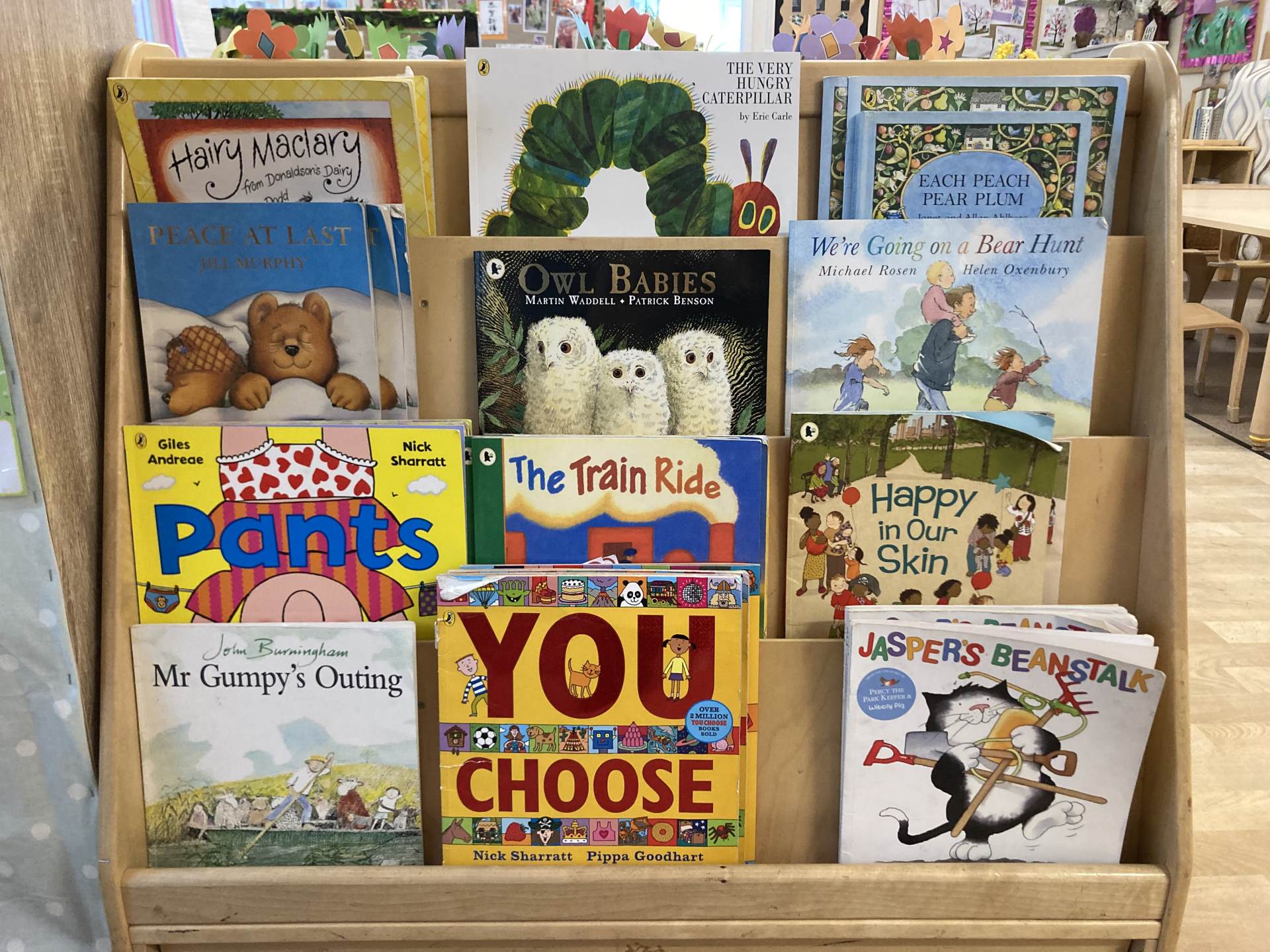
- respond to familiar rhymes and stories
- handle books carefully, turning pages holding the book the right way up
- look at books independently
- recognise familiar words and signs (including their own name, advertising logos)
- gain simple meaning by using illustrations, when not yet able to read text
- state simple likes/dislikes about familiar texts
- retell an event in a story or information from a non-fiction text
- sit attentively and listen to stories (at age appropriate stage )
- show curiosity about content in stories (may begin to discuss content and answer basic questions about a story. E.g. How? Why?
- have a core collection of stories that are so familiar, that the children can retell and ‘read’ them independently.
Phonics
From an early age, our children explore sounds in the environment, through instruments and using their voices and bodies during play, rhymes and games.
As children progress through the school, they develop their phonological awareness through Phase 2 phonics, exploring rhythm and rhyme, alliteration, syllables and identifying sounds in words.